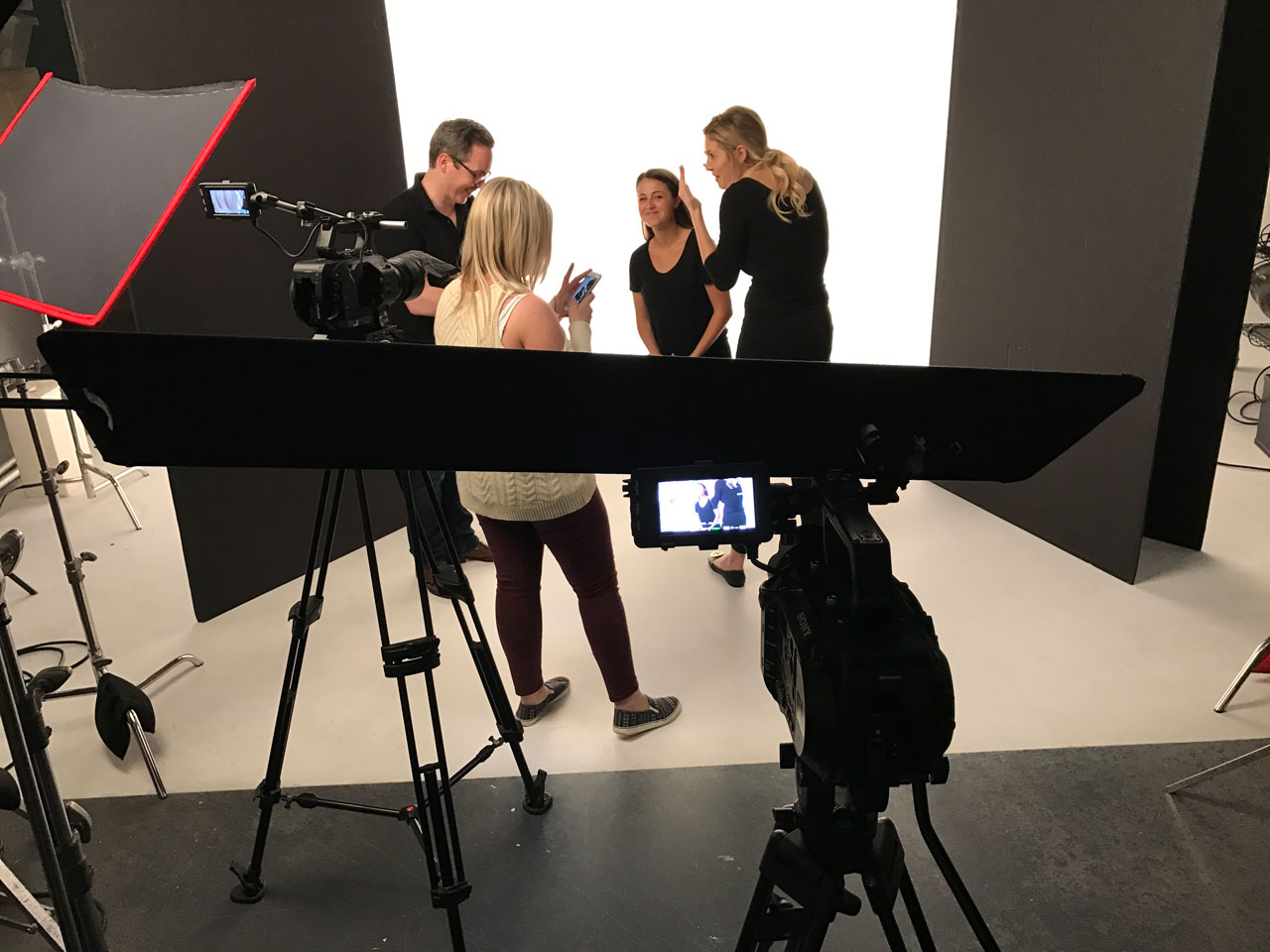
Here's a truth most performance marketers won't tell you: the cheapest cost per lead almost never produces the highest revenue.
Ugly ads with grainy smartphone footage, harsh lighting, and amateur editing can generate $4 leads all day long. Those leads are garbage. They're tire-kickers, freebie seekers, and people who will ghost your sales team after wasting 45 minutes on a discovery call.
Cinematic video ads with professional lighting, intentional color grading, and polished editing might cost $18 per lead. Those leads close at 31% instead of 4% and spend $15,000 instead of $1,500.
After producing over 10,000 video ads for high-ticket offers (coaching programs, B2B services, premium products), we've learned that production quality isn't about vanity. It's a qualification filter that attracts people with money to spend and repels people who can't afford your actual offer.
Here's why cinematic video ads generate better buyers, even though they cost more upfront.
Your brain makes snap judgments about status and wealth within 0.4 seconds of seeing visual stimuli. High production value signals high status. Low production value signals low status.
This happens subconsciously. The viewer doesn't think "this video looks cheap, therefore this company is cheap." They just feel a vague discomfort or lack of trust that prevents them from taking action.
When someone with significant disposable income (the kind of person who can write a $20,000 check without financing) sees an amateur video ad, their brain categorizes the brand as "not for me." Not because they consciously judge production quality, but because the visual signals don't match their self-perception of status.
Conversely, when that same person sees cinematic production (professional lighting creating dimensional depth, color grading that feels premium, intentional camera movement, clean audio), their brain categorizes the brand as "aligned with my standards."
This is why we obsess over production quality for video production Greenville SC clients selling high-ticket offers. We're not trying to impress videographers. We're using visual psychology to attract buyers who have money and repel people who don't.
Most business owners think lighting is about "making things visible." That's wrong.
Lighting is about creating depth, dimension, and visual hierarchy that signals resource investment.
Flat lighting (single light source, harsh shadows, no fill) is what you get from overhead fluorescents or a window with no diffusion. It's free. It looks free. People who are price-sensitive respond to it because it matches their expectations.
Cinematic lighting (three-point setups with key light, fill light, and backlight creating soft shadows and dimensional separation between subject and background) costs money in gear and expertise. It looks expensive. People with money respond to it because it matches their standards.
We use cinema-grade LED panels with diffusion, colored gels for environmental accents, and strategic backlighting that creates subtle rim light around subjects. This isn't about being fancy. It's about triggering the neurological response wealthy people have to high-quality visual environments.
When we create Facebook video ads or Instagram video ads for premium offers, lighting quality alone can be the difference between $12 leads who never buy and $28 leads who close at 35%.
Color grading isn't "making the video pretty." It's psychological positioning through chromatic manipulation.
Budget-conscious buyers respond to oversaturated, high-contrast, "punchy" color grades. Think infomercials. Bright reds, electric blues, aggressive skin tone warmth. This triggers urgency and impulse buying.
Affluent buyers respond to desaturated, controlled, cinematic color grades. Muted tones, subtle color shifts, film-like contrast ratios. This triggers sophistication and thoughtful decision-making.
The difference is subtle. A $500 buyer sees a saturated, aggressive grade and thinks "this looks exciting!" A $50,000 buyer sees the same grade and thinks "this looks like a scam."
We grade our ads for premium audiences with:
This creates a visual aesthetic that wealthy buyers associate with premium brands they already trust.
Static shots (locked-down camera, no movement) are efficient and cheap. They also signal "we didn't invest in this production."
Cinematic camera movement (slow push-ins on sliders, subtle gimbal movements, intentional rack focus shifts) signals "we care about craft and quality."
Wealthy buyers notice this, even if they can't articulate it. The presence of intentional movement tells their subconscious "this company invests in quality, which means they probably deliver quality."
We use motorized sliders for slow, smooth push-ins during key emotional moments. We use gimbals for walking shots that feel immersive. We use manual focus pulls to shift attention between elements in the frame.
None of this is visible to the average viewer in a conscious way. But their brain registers "this feels different from the 47 other ads I've seen today," which increases attention and trust.
Here's something most marketers miss: wealthy people have been exposed to higher-quality audio their entire lives (premium headphones, high-end car sound systems, home theater setups).
When they hear compressed, muddy, or poorly mixed audio in a video ad, they register it as "low quality" faster than budget-conscious buyers do.
We mix our ads with:
This level of audio precision costs more in post-production time. It's also mandatory for attracting buyers who unconsciously filter out anything that sounds "cheap."
Cinematic production quality attracts attention. But the script determines whether that attention converts to revenue.
Wealthy buyers make decisions differently than budget buyers:
Budget Buyers:
Wealthy Buyers:
Our scripts for cinematic ads speak directly to affluent psychology:
"This isn't for everyone. We work with a maximum of 12 clients at a time because this level of customization requires complete focus."
"We don't offer payment plans. Our clients prefer to invest fully upfront and receive white-glove implementation support."
These statements repel price-sensitive buyers (who self-select out, saving us ad spend) and attract wealthy buyers (who value exclusivity and full-service delivery).
Let's address the elephant in the room: sometimes ugly ads with $3 cost per lead outperform cinematic ads with $22 cost per lead in platform metrics.
If you're only looking at cost per lead, the ugly ad wins.
If you're looking at cost per qualified lead, cost per sale, average transaction value, and lifetime customer value, the cinematic ad destroys it.
Example from a recent campaign:
Ugly Ad:
Cinematic Ad:
The cinematic ad had a 371% higher cost per lead but a 55% lower cost per customer and 933% higher transaction value.
This is why we obsess over production quality for high-ticket offers. Cheap leads are a vanity metric when they don't convert to revenue.
Here's something most advertisers don't understand: Meta's algorithm doesn't just optimize for cost per result. It optimizes for value per conversion.
When your cinematic ad attracts buyers who spend $15,000, Meta's algorithm learns that the people who engage with this type of content have high purchasing power. It shows your ad to more people with similar characteristics (income level, spending behavior, engagement patterns).
When your ugly ad attracts tire-kickers who request quotes and never buy, Meta's algorithm learns that the people who engage with this content don't convert. It either charges you more to reach better audiences or shows your ad to more people who won't buy.
Over time, the cinematic ad gets cheaper because the algorithm rewards content that drives valuable conversions. The ugly ad gets more expensive because the algorithm punishes content that generates low-value actions. We write extensively about this intersection of production quality and ad performance on our blog.
Cinematic video ads aren't about ego or artistic vision. They're about using production quality as a psychological filter that attracts people with money and repels people without it.
If you're selling a $97 course, ugly ads might be optimal. Your target buyer is price-sensitive, so high production value could actually hurt conversion by making the offer seem too expensive.
If you're selling $10,000+ offers, cinematic production is mandatory. Your target buyer expects premium quality in everything they consume, and amateur video signals that you don't meet their standards.
We've spent 21 years learning how to use lighting, color grading, camera movement, and audio quality to trigger the neurological responses that wealthy buyers have to premium content. See how these cinematic techniques look in practice across our recent production work.
The cost per lead might be higher. But the revenue per customer is so much higher that it's not even a comparison.
Related reading: 10 Meta Video Ad Ingredients That Beat the Algorithm · The Real Cost of Cheap Video Production