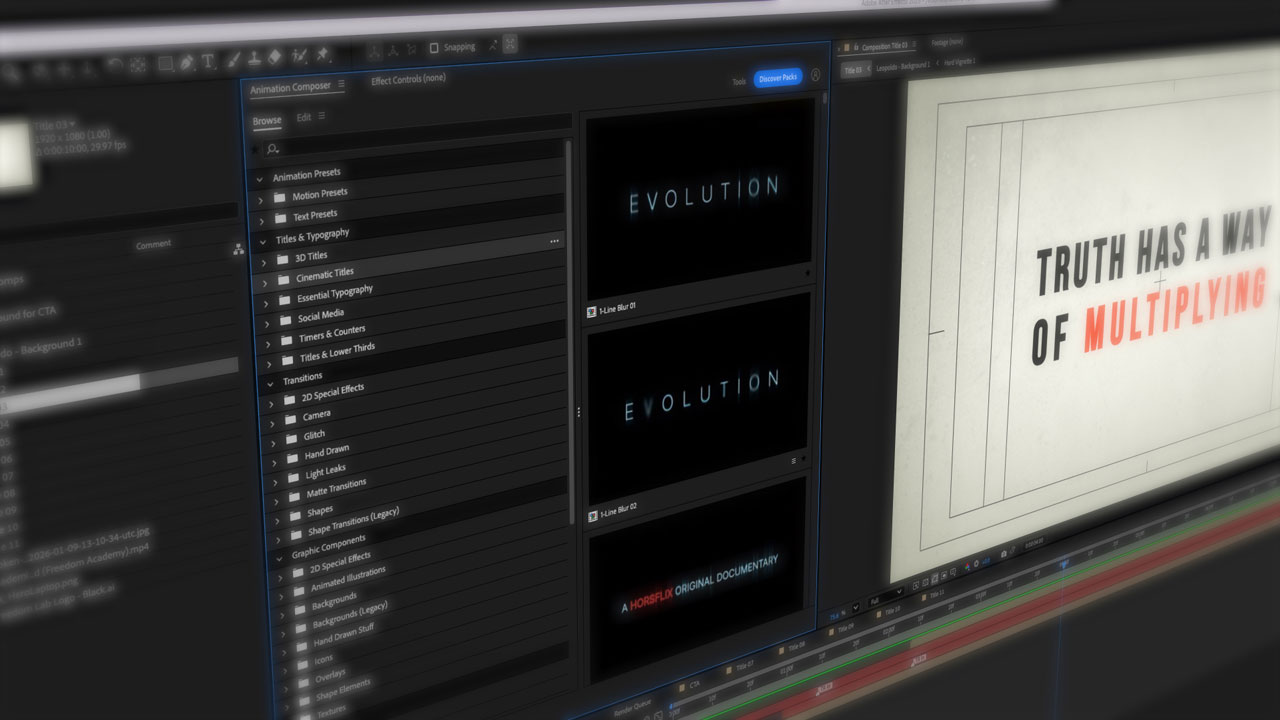
Every video production company will tell you that motion graphics are more engaging than stock footage. Every stock footage library will tell you that authentic footage connects better than animation. Neither is right. Both are selling something.
The real question—the one that actually determines ROI—is: what does your specific audience need to understand, and which visual approach creates that understanding more efficiently?
After producing videos for companies selling everything from complex SaaS platforms to professional services to physical products, we've learned that the choice between motion graphics and stock footage is a strategic decision with real revenue consequences. Here's the framework we use.
Motion graphics outperform authentic footage in one primary circumstance: when you're communicating something that doesn't exist in physical reality or can't be photographed.
Abstract processes. Data relationships. System architectures. Invisible mechanisms. If you're trying to show how information flows through your platform, how your algorithm processes customer data, or why your methodology produces different results than competitors, you cannot shoot this footage. You have to create it. The only question is whether you create it well or poorly.
The second circumstance where motion graphics win is when the authentic footage alternative is inherently unconvincing. If your B2B service "saves clients time" and the alternative to animation is showing someone looking satisfied at a laptop, the laptop footage is so generic as to be meaningless. A motion graphic showing time reclaimed, processes streamlined, or complexity reduced can actually illustrate what the laptop footage can only vaguely suggest.
The third circumstance is data. When the evidence for your value proposition is statistical, motion graphics can transform raw numbers into emotional understanding. Animated data visualization creates the visceral experience of scale that text-based statistics cannot. "37% faster" in text is a claim. "37% faster" shown through side-by-side animated timelines becomes tangible.
Stock footage has one massive problem that most marketing teams understand intellectually but underestimate emotionally: viewers can tell.
Not always consciously. But the generic ethnically diverse team around a conference table, the perfectly attractive professional staring at a monitor with ideal lighting, the stock handshake—these images have been seen so many times that they trigger a subconscious "this isn't real" response. The viewer doesn't think "that's stock footage." They think "I don't trust this company." The connection between stimulus and response is automatic.
For businesses where trust is the primary barrier to purchase—professional services, consulting, healthcare, financial services—stock footage is almost always the wrong choice. The cost of undermining trust exceeds whatever you saved by not shooting original footage.
Here's how to think about this decision financially:
Motion graphics have higher upfront production costs but zero ongoing costs. A well-executed explainer animation remains accurate and useful for 3-5 years without updates. Stock footage has lower upfront costs but carries hidden costs in credibility and trust—which translate to conversion rates, and conversion rates translate directly to revenue.
The businesses where we see the strongest ROI from motion graphics are companies with complex products that require genuine explanation before purchase. When the animation is the difference between a prospect understanding your product well enough to buy and not understanding it at all, the ROI calculation is straightforward.
The businesses where we see the strongest ROI from original footage (as opposed to either motion graphics or stock) are companies where the people are the product. Professional services firms, consulting companies, coaching businesses. In these contexts, authentic footage of real people doing real work creates trust that neither animation nor stock footage can replicate.
The most effective videos for complex B2B products typically use both: authentic footage to establish trust and demonstrate real human value, motion graphics to explain mechanisms and communicate data. The combination gives you credibility from the authentic footage and clarity from the animation, which is often more valuable than either alone.
The key to executing this well is ensuring that both visual languages feel intentional and coherent rather than patched together. This requires a unified creative direction that determines the visual relationship between footage and animation before production begins.
We've produced hundreds of videos using both approaches. The one constant: the choice should be made based on what creates the most accurate and efficient understanding in the target viewer, not based on budget alone or aesthetic preference.
For more on this, read our guide on pattern interrupts and watch time.