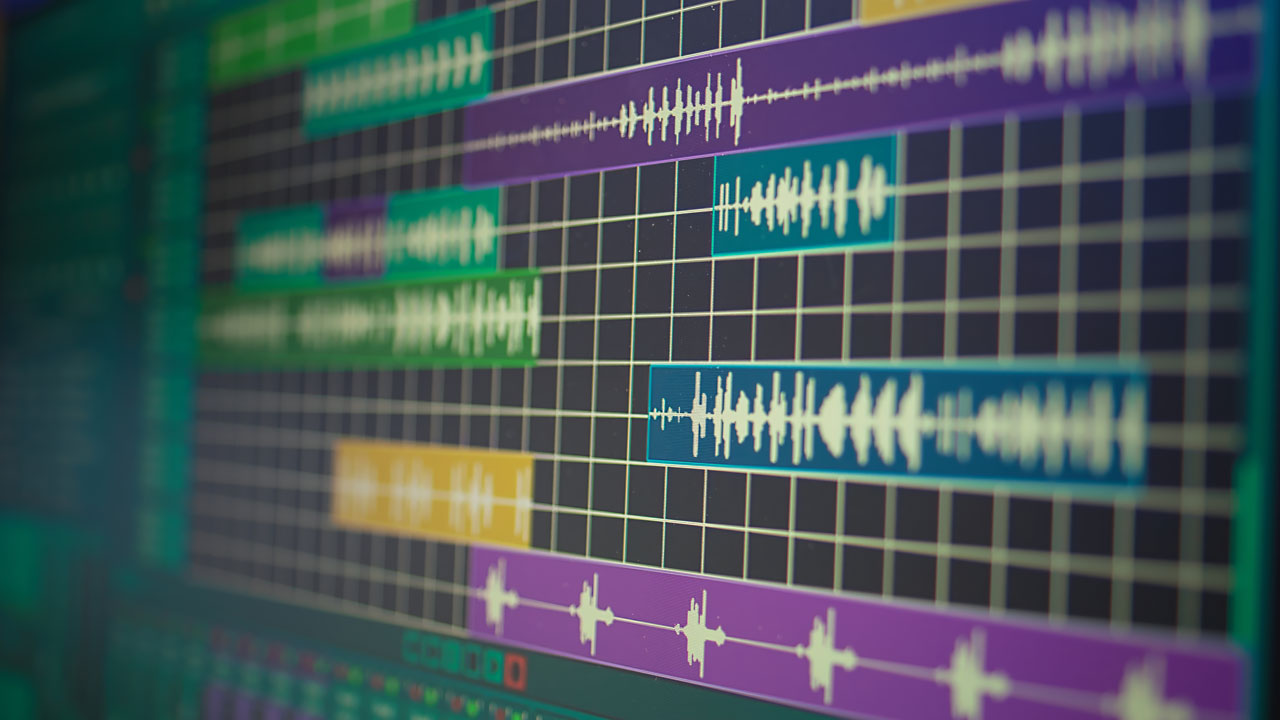
Here's a stat that should terrify you: 68% of viewers will stop watching a video ad within the first 10 seconds if the audio quality is poor. Not because they consciously decide to leave. Because their brain registers a threat response and triggers an instinctive exit.
Most businesses obsess over visuals. They spend weeks perfecting the script, thousands on lighting, and hours debating which B-roll shots to use. Then they slap on a royalty-free music track, do a quick volume balance, and call it done.
That's why their ads don't convert.
After producing over 10,000 videos for clients like ClickFunnels, Kajabi, and Mastermind.com, we've learned something most video production companies miss: your brain processes sound 20 to 100 milliseconds faster than visuals. What people hear determines how they feel before they even process what they're seeing.
Sound design isn't about "making it sound good." It's about triggering specific neurological responses that make viewers feel compelled to keep watching and take action. Here's how the psychology actually works.
Evolution didn't prepare humans for screens. It prepared us to detect threats in the environment, and sound was the early warning system.
When you hear inconsistent audio, reverb that doesn't match the visual space, or jarring frequency spikes, your amygdala registers it as environmental danger. Your body releases cortisol. Your attention shifts from "what is this person saying" to "something is wrong here."
This happens subconsciously. The viewer doesn't think "the audio sounds bad." They just feel uneasy and scroll to the next video.
Professional sound design does the opposite. We use frequency ranges, strategic silence, and audio layers to trigger dopamine release instead of cortisol. Clean dialogue makes the brain relax. Well-timed music swells create anticipation. Strategic sound effects act as pattern interrupts that reset attention.
When we're working on corporate video production, we're not just "fixing" audio. We're engineering an emotional experience that keeps the limbic system engaged.
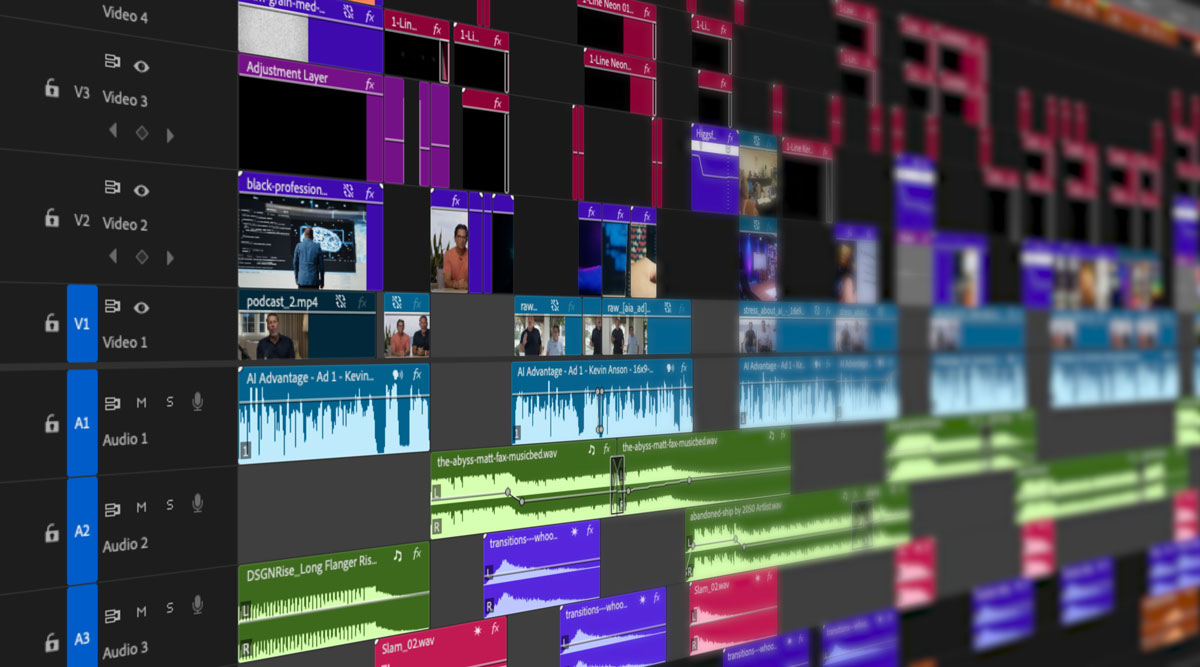
Most amateur editors think sound has two tracks: dialogue and music. Professional editors work in layers, each designed to trigger a specific neurological response.
Layer 1: Dialogue Clarity (Trust Response)
Your dialogue track isn't just about being "loud enough to hear." It's about creating the psychological perception of intimacy and authority.
We use compression to make the speaker's voice feel like it's 18 inches from your ear, regardless of where the microphone was during filming. We remove resonant frequencies that make voices sound thin or hollow. We add subtle EQ to emphasize the 3-5kHz range where the human voice carries authority.
When dialogue sounds crisp and present, the brain interprets it as direct communication. The speaker feels trustworthy. When dialogue sounds distant or muddy, the brain disengages because it has to work too hard to process the information.
Layer 2: Music (Emotional Priming)
Music doesn't just "set the mood." It primes the viewer's emotional state so they're receptive to your message.
Minor keys create tension and urgency. Major keys signal safety and positivity. Ascending melodies build anticipation. Descending melodies create resolution.
But here's what most people get wrong: the music should enter and exit at psychologically strategic moments, not just play from start to finish. We bring music in 2.7 seconds after the hook (not before, which competes for attention). We pull it out completely during key CTAs so there's zero cognitive competition. We use volume automation so music swells during emotional beats and ducks during information-dense sections.
The goal isn't to make the viewer notice the music. The goal is to make them feel something they can't consciously explain.
Layer 3: Sound Design & Ambience (Spatial Reality)
This is the layer most businesses skip entirely, and it's catastrophic for video production services in Greenville companies trying to compete with national brands.
Sound design includes:
When these elements are missing, your video feels flat and artificial. When they're present, the viewer's brain accepts the scene as "real" and stops looking for inconsistencies.
Not all sound is processed equally. Different frequency ranges trigger different psychological responses.
20-60 Hz (Subconscious Tension): This is the range of thunder, earthquakes, and predator growls. When used subtly in music or ambience, it creates urgency without the viewer knowing why. We use this in the first 3 seconds of ads to break pattern and force attention.
250-500 Hz (Warmth and Trust): This is where the human voice naturally resonates. Boosting this range slightly makes speakers sound more authoritative and trustworthy. Cutting it makes them sound thin and untrustworthy.
2-5 kHz (Clarity and Presence): This is the frequency range where consonants live. When this range is clear, dialogue feels effortless to understand. When it's muddy, the brain has to work hard, which triggers fatigue and disengagement.
8-12 kHz (Airiness and Premium Feel): Subtle high-frequency content makes audio feel "expensive" and professional. Too much sounds harsh and cheap. The difference between a $50,000 brand video and a $500 Fiverr video often comes down to how this range is handled.
The absence of sound is just as important as the presence of it.
Strategic silence creates emphasis. When you stop all music and ambient sound for 1.5 seconds before a key claim, the viewer's brain interprets the claim as critically important. Silence acts as a psychological highlighter.
We use micro-silences (0.2 to 0.5 seconds) between sentences to give the brain time to process information without feeling rushed. We use longer silences (1 to 3 seconds) before CTAs to create anticipation and make the ask feel like the natural resolution to tension.
Most amateur editors are terrified of silence. They fill every gap with music or background noise. Professional editors understand that the brain needs breathing room to stay engaged.
Even if you understand sound psychology, poor mixing will destroy everything. Here are the three most common mistakes we see in corporate video production:
Mistake #1: Music Competing With Dialogue
If we can't understand every word effortlessly, you've lost. Music should sit 12-18 dB below dialogue during speaking sections. Most amateur mixes put them 6-8 dB apart, which forces the brain to work too hard.
Mistake #2: Inconsistent Volume Levels
When viewers have to adjust their volume mid-video, they leave. Professional mixes use compression and limiting to ensure every section sits within a 3 dB range. The viewer should never have to touch their volume button.
Mistake #3: Ignoring Platform Compression
Facebook, Instagram, and YouTube all compress audio differently. If you don't master for platform-specific compression algorithms, your carefully mixed audio will sound like garbage when it's uploaded. We test every mix on the actual platform before delivery.
Bad audio doesn't just sound unprofessional. It triggers neurological responses that make viewers flee before they consciously understand why.
Professional sound design is about understanding how the brain processes frequency, rhythm, and silence. It's about using these tools to create emotional states that make viewers receptive to your message and compelled to act.
Your video's success isn't determined by your camera or your lighting. It's determined by whether you understand the neuroscience of sound. To hear how our audio approach impacts finished work, see recent video examples from our client campaigns.
We've spent 21 years learning what makes people feel safe enough to trust, engaged enough to watch, and motivated enough to click. That's not something you learn from a YouTube tutorial on "how to mix audio." For more on the editing and production techniques that drive conversion, read more on our blog.
Related reading: Video Editing for Facebook Ad Retention · On-Screen Text Psychological Messaging for Video Ads