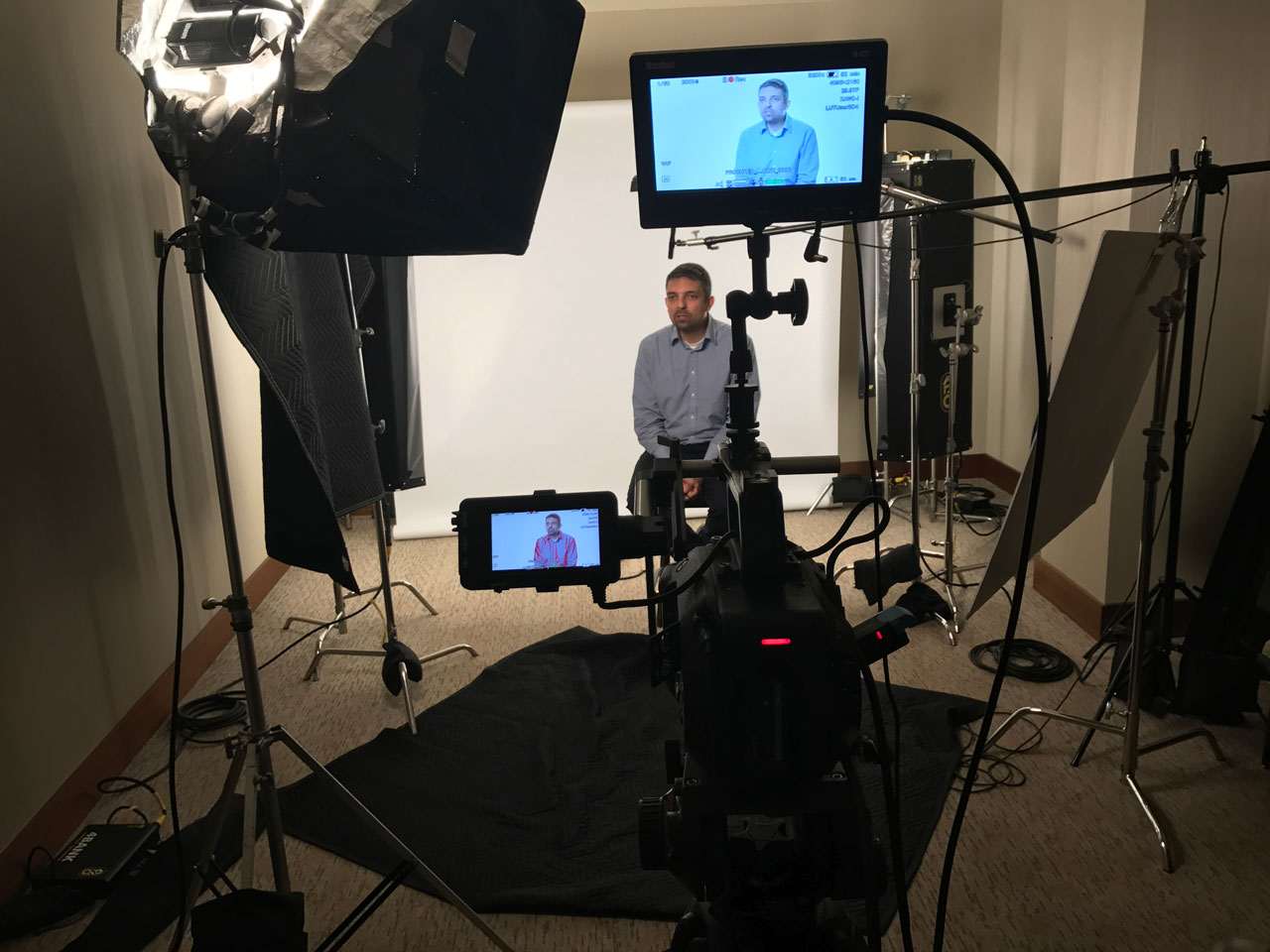
Your CEO looks brilliant in boardrooms. Commanding in investor meetings. Persuasive in sales calls. But put a camera in front of them and suddenly they can't remember their own company's value proposition.
This is one of the most expensive problems in corporate video production and almost nobody talks about it honestly. Companies budget $25,000 for a corporate video and lose half the production value because their executives look uncomfortable on camera.
After 21 years of corporate video production in Greenville, SC and with clients across the country, we've developed specific techniques for getting executives camera-ready in ways that preserve their natural authority while eliminating the stiffness, self-consciousness, and performance quality that kills credibility.
The problem isn't confidence. Executives who freeze on camera are often among the most confident people in their organizations. The problem is context shift.
When an executive is presenting in a boardroom, they have environmental anchors: a physical space they know, an audience they can read, a conversation they can adapt in real time. They're performing within a system they understand.
On camera, those anchors disappear. There's a lens where a human face should be. There's no audience feedback to calibrate to. Every word feels permanent and official rather than conversational. The executive shifts from natural communication mode to performance mode, and performance mode looks exactly like what it is.
Our goal isn't to turn executives into actors. It's to recreate the conditions that bring out their natural authority.
Most video crews spend two hours lighting a room and thirty seconds preparing the subject. We invert this.
Before any camera rolls, we spend time in actual conversation with the executive about topics completely unrelated to what we're filming. Not small talk—real conversation about things they're genuinely interested in. The goal is to get their communication system running in natural mode before we introduce the camera.
We then transition gradually. We'll start recording while still in conversation mode, letting the executive discover that the camera is rolling rather than announcing it. The first few minutes of footage are never used. They're a calibration period that brings the executive's comfort level to a usable state.
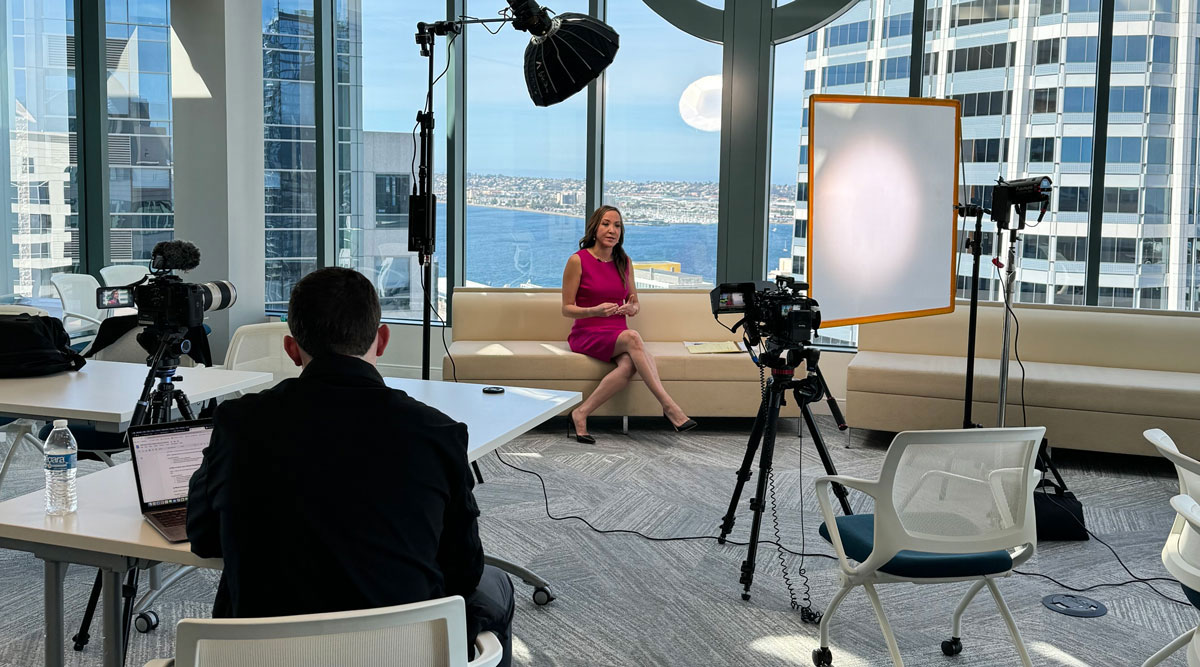
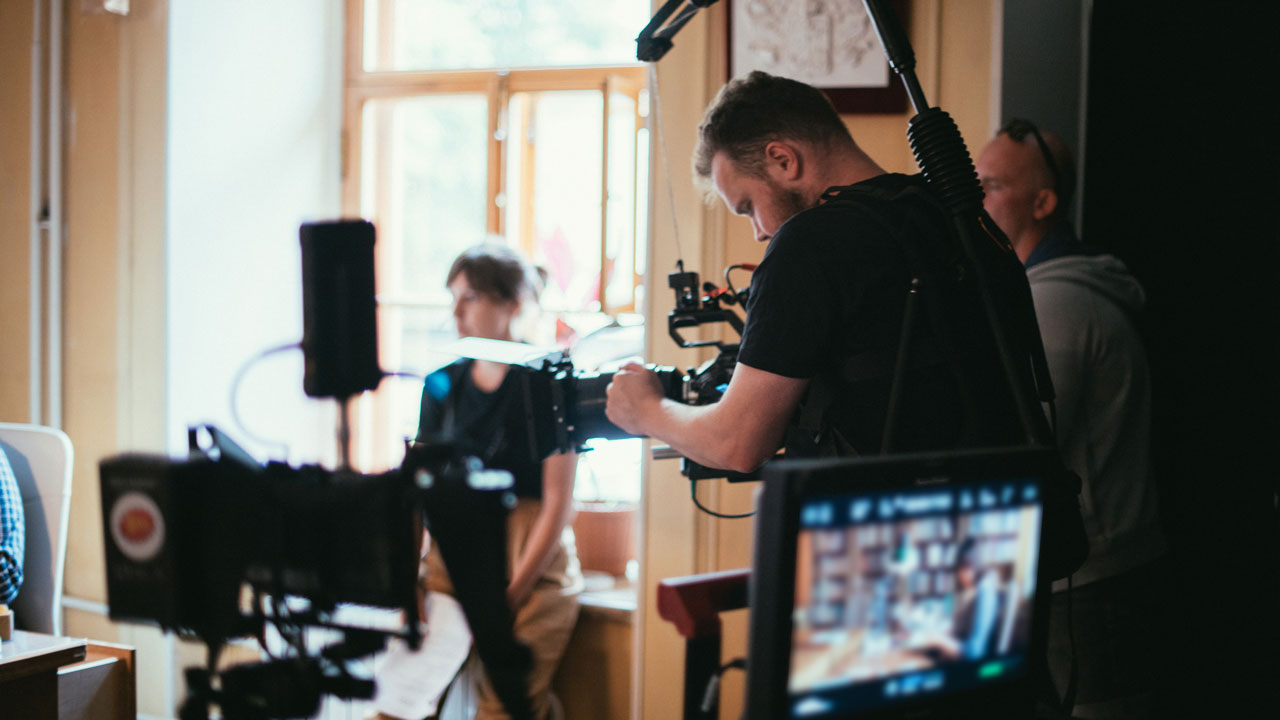
Physical setup matters equally. We position cameras at eye level or slightly below, which triggers more authoritative posture. We ensure the executive can move naturally rather than being locked into a fixed position. We set the interview distance so conversation feels natural rather than performative.
Most corporate video interviews ask executives to deliver pre-written statements. This is the single biggest mistake in executive video production.
Pre-written statements turn executives into performers. When they're trying to remember exact words, they disconnect from meaning. Viewers experience this as inauthenticity, even when they can't articulate why.
We use a question framework instead. We provide executives with topic areas and key messages beforehand, but the actual interview uses questions designed to elicit those messages through natural conversation. The difference in output quality is dramatic: the same executive, the same message, completely different energy and credibility.
The questions are designed to trigger specific psychological states:
"Tell me about a client situation where everything went wrong and how you handled it" produces authentic problem-solving content and displays genuine expertise better than any scripted explanation of methodology.
"What do most companies in your space get fundamentally wrong?" produces strong positioning content and triggers the executive's genuine passion for their perspective.
"Walk me through what you'd tell a client who is considering working with a competitor" produces the most authentic competitive differentiation content we've ever filmed.
Self-consciousness comes from self-monitoring. The executive is simultaneously trying to communicate and observe how they're coming across. This dual attention destroys natural communication.
We reduce self-consciousness through several specific techniques:
We never show executives playback during interviews. Seeing themselves on screen activates intense self-criticism that they can't turn off. We assure them that any technical issues are our responsibility to catch, not theirs to monitor.
We run interviews longer than necessary. The first third of most executive interviews is warm-up footage we don't use. By the second half, the subject has forgotten to be self-conscious and is speaking with natural authority. This is where we capture the footage that ends up in the final cut.
We use two-camera setups when possible. When executives know their words are being captured from multiple angles, they stop worrying about where to look and focus on what they're saying.
How you edit executive footage determines whether their authority comes through or gets buried.
Cutting too frequently makes executives look uncertain, as if their thoughts are fragmented. The edit pace should match the executive's natural speaking rhythm, not the editor's preference for visual variety.
Jump cuts in interview footage—where the camera position stays the same but time clearly jumps—read as either dishonest editing or incompetent production. We avoid them with cutaway footage or camera angle changes.
The opening shot of an executive matters enormously. Beginning on a medium shot with the executive already in mid-thought, slightly before they've noticed the cut, creates the impression of interrupted authority rather than performed statement.
We've spent 21 years refining these techniques because executive credibility on camera is what separates corporate videos that actually influence prospects from videos that just document a polished spokesperson. The camera doesn't lie, but it can learn to tell the right truth.
For more on this, read our guide on getting executives camera ready in 60 seconds.