Synthesia. HeyGen. Runway. Sora.
Every few months a new AI video generation tool launches promising to "eliminate the need for expensive video production" and "create broadcast-quality videos from text prompts in minutes."
CEOs see the demos, get excited about the cost savings, and ask their marketing teams "why are we still hiring video production companies when we can just type what we want and get a video?"
Here's the answer: because AI-generated videos trigger the uncanny valley effect in 87% of viewers, which tanks trust and credibility for any brand trying to sell something that costs more than $50.
After producing over 10,000 real videos and testing every major AI video tool on the market, we've learned exactly when these tools add value and when they destroy credibility. Here's what most companies don't understand about the current state of AI video production.
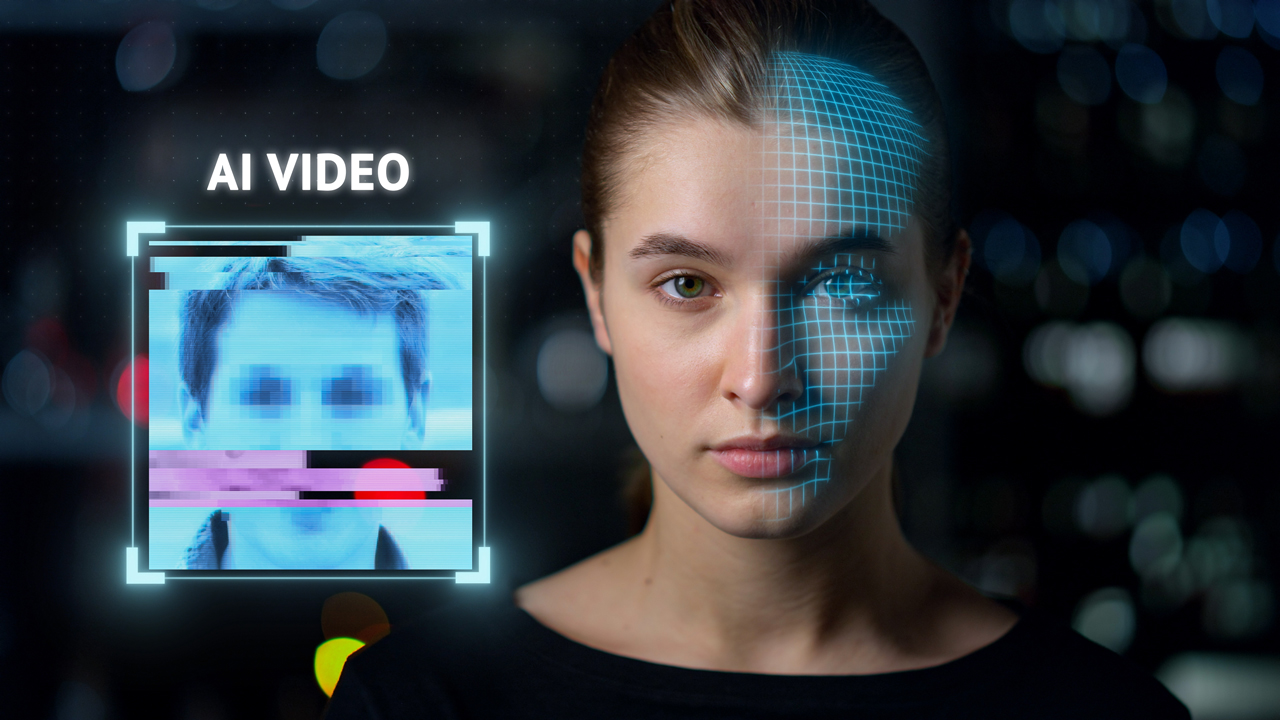
The uncanny valley is the phenomenon where something almost-but-not-quite-human triggers instinctive revulsion and distrust.
AI avatars in 2026 look 92% realistic. That last 8% is catastrophic.
The eyes don't track quite right. The mouth movements are synchronized to words but not to emotion. The micro-expressions that signal genuine human feeling are missing. The viewer's brain notices these inconsistencies in the first 3 seconds and registers "fake."
Once the brain tags something as fake, trust evaporates. This isn't conscious. The viewer doesn't think "that avatar looks slightly off." They just feel uneasy about the brand and can't articulate why.
For low-stakes content (internal training videos, process documentation, HR onboarding), this doesn't matter. No one expects internal training to feel warm and authentic.
For high-stakes content (sales videos, brand messaging, client testimonials, anything requiring emotional connection or trust), AI avatars are credibility suicide.
We've A/B tested this extensively. A sales video with a real human spokesperson converts at 8.7%. The exact same script delivered by a Synthesia avatar converts at 2.1%. Same offer. Same target audience. The only variable was real vs. AI presenter.
The conversion gap isn't because the AI avatar is "bad." It's because human brains are evolutionarily wired to detect threats through facial micro-expressions, and AI avatars fail that test.
That doesn't mean AI video generation is useless. It means you need to understand when the tool serves the goal and when it sabotages it.
Scenario 1: Personalized Video at Scale (HeyGen, Synthesia)
If you need to send 10,000 personalized videos to individual prospects where the only variable is their name and company, AI avatars work.
Example: "Hi [Name], I noticed [Company] is hiring for a VP of Sales. Here's how our platform helps companies like yours close that role 40% faster."
The viewer knows this is automated. They're not expecting authentic human connection. They're evaluating whether the information is relevant. AI tools let you create thousands of these videos in hours instead of days.
For corporate video production where scale matters more than emotional resonance, this is legitimate use.
Scenario 2: Rapid Concept Testing (Runway, Pika)
If you need to test 15 different creative concepts for a campaign before committing to real production, generative AI lets you create rough visualizations in minutes.
Instead of describing concepts in a deck ("imagine a time-lapse of a city transitioning from chaos to order"), you can generate actual video clips showing different visual approaches.
This speeds up creative decision-making and reduces the risk of investing in full production for concepts that won't resonate. But the final production should still be real footage or high-end animation, not the AI-generated test clips.
Scenario 3: B-Roll and Stock Footage Replacement (Runway, Pika, Luma)
When you need a specific visual that doesn't exist in stock libraries (a futuristic office environment, a abstract representation of data flowing through systems, a stylized product visualization), AI video generation can create usable B-roll.
The key phrase is "usable B-roll." Not hero shots. Not primary footage. Not anything where realism matters.
AI-generated B-roll works when it's clearly stylized or abstract, not when it's trying to look like real footage. A swirling abstract representation of "efficiency" works. A fake office with AI-generated people looks cheap.
Despite clear evidence that AI avatars kill conversion in sales contexts, companies keep using them because "it's so much cheaper than real production."
This is the logic of someone who sees a $200 car insurance policy and an $800 policy and picks the cheaper one without reading the coverage. You're not saving money if the thing doesn't work.
Failure Point 1: Testimonials and Case Studies
We've seen companies replace real customer testimonials with AI-generated avatars delivering the testimonial script.
This is insane.
The entire point of a testimonial is third-party social proof from a real human who risked their reputation by endorsing your product. An AI avatar reading a testimonial script has zero credibility value because everyone knows it's not a real person.
You've converted powerful social proof into corporate propaganda. The conversion impact is negative.
Failure Point 2: Founder and Leadership Messaging
Some companies use AI avatars for founder messages because "our CEO doesn't want to be on camera."
If your CEO won't spend 20 minutes on camera explaining why your company exists and what you stand for, you have a leadership problem, not a production problem.
Founder-led content works because people buy from people. They want to see that a real human with a real reputation is behind the company. An AI avatar removes the one thing that makes founder content valuable.
Failure Point 3: Product Demonstrations
AI tools struggle with specificity. If you need to show exactly how your software interface works, AI generation will hallucinate UI elements that don't exist, create workflows that don't match your actual product, and confuse prospects.
For product demos, screen recording with voiceover is faster, cheaper, and more accurate than trying to prompt an AI tool to generate something that matches reality.
The companies getting ROI from AI video tools aren't replacing human production. They're using AI to augment specific workflow steps.
Pre-Production: Script and Storyboard Visualization
Use AI tools to generate quick visual references during the scripting phase. This helps clients and stakeholders visualize concepts before committing to production budgets.
Production: B-Roll Gap Filling
When you're in editing and realize you need one specific shot you didn't capture (a cityscape at sunset, an abstract visual metaphor, a stylized environment), use AI generation to create that single asset rather than scheduling a reshoot.
Post-Production: Localization and Translation
Tools like HeyGen can take your real footage and dub it into 50 different languages with lip-sync. This is dramatically cheaper than hiring multilingual talent and reshooting the same video in each language. The base content is real (which maintains trust), but the localization is AI-assisted.
This hybrid model uses AI where it adds efficiency without sacrificing authenticity, and uses real production where human connection and credibility matter.
People ask us if we're concerned that AI will replace video production.
No.
Because we're not selling "video production." We're selling trust, credibility, and emotional connection. Those things require real humans.
AI tools are excellent at generating content. They're terrible at generating trust.
When a prospect watches a video and needs to decide whether to give you $50,000, $500,000, or $5 million, the presence of a real human who's willing to put their face and reputation on camera matters enormously. That's the foundation of our approach at Anson Creative, where human psychology and authentic storytelling have driven results for over two decades.
The companies that will struggle aren't production companies. They're the commodity content mills churning out generic explainer videos that could be replaced by AI because they never created emotional connection anyway.
Strategic video production focused on human psychology and conversion won't be replaced. It will be augmented by AI tools that make specific workflow steps faster and cheaper.
AI video generation tools are useful for specific applications: personalized video at scale, rapid concept testing, B-roll gap filling, and localization.
They're catastrophic for applications requiring trust and emotional connection: testimonials, founder messaging, sales videos, and anything where the viewer needs to believe a real human stands behind the message.
The question isn't "should we use AI video tools?" The question is "which parts of our video strategy benefit from AI efficiency and which parts require authentic human presence?"
Companies that answer that question correctly will reduce costs without destroying credibility. Companies that assume "AI is cheaper so we should use it for everything" will learn expensive lessons about the relationship between authenticity and conversion.
We've spent 21 years understanding what makes people trust video content enough to take action. The technology changes. The psychology doesn't.
Related reading: B-Roll That Actually Sells: The Shot List Framework · Video Production Pre-Production Checklist